

Anxiety Therapy in Toronto's Little Portugal
Overthinker. Worrier. Just prepared. Or anxious?
Anxiety doesn't always look like visible worry. It can look like irritability, trouble sleeping, physical symptoms like a tight chest or upset stomach, or exhaustion from a nervous system that never fully powers down. It's a mind that won't slow down, a body that stays braced even when nothing's actively wrong, a constant sense that something's about to go sideways.
A lot of people living with it don't recognize it as anxiety at all. They think of themselves as overthinkers, or just more prepared than everyone else, or "a worrier" — like it's a personality trait rather than something that's actually costing them sleep, ease, and peace of mind. For some people it's tied to something specific — work, health, a relationship. For others it's harder to pin down. Both are treatable.

Anxiety or stress? It's not always obvious.
Restlessness, a racing mind, trouble sleeping. Stress is usually a response to something identifiable and tends to ease once that thing resolves. Anxiety often persists even after the initial situation is gone, or shows up without an identifiable one at all. They're not mutually exclusive; chronic, unaddressed stress can develop into an anxiety disorder, and the exact label matters less than getting the right support either way.
Anxiety doesn't look the same for everyone
"Anxiety" isn't one single experience. Some of the presentations we see most often:
✓ Generalized Anxiety Disorder (GAD)
Persistent, hard-to-control worry across multiple areas of life, most days, for six months or more
✓ Social Anxiety Disorder
Intense fear of being judged, embarrassed, or scrutinized in social or performance situations
✓ Panic Disorder
Recurring, unexpected panic attacks, often followed by ongoing fear of the next one
✓ Health Anxiety
Persistent worry about having or developing a serious illness, despite reassurance or medical evaluation
✓ Situational or Anticipatory Anxiety
Anxiety concentrated around a specific upcoming event, decision, or context
✓ High-functioning Anxiety
Meeting responsibilities and appearing composed on the outside while managing significant internal distress
Here’s How to Connect

Fill out the form to schedule your free 20-minute intro call to explore how therapy can support you. We’ll help you get matched with the right therapist for you.
Email us with any questions you might have.
To book an appointment via JaneApp use the link below.

Schedule Your Free Consultation
Reaching out is usually the hardest part. From here, things get simpler.
Fill out the form below and one of us will be in touch within one business day, usually the same day. No pressure, no commitment. Just a conversation.
Book your free 20-minute intro call today. Schedule at your convenience.


Our team
Our team has deep experience working with clients that suffer from anxiety, both adults, teens and children. Whether you’re managing daily challenges or want a more comprehensive, structured roadmap, we’ll help you find the right path forward.


How therapy actually helps
Anxiety is convincing. It tells you the worst-case scenario is likely, that vigilance is keeping you safe, that relaxing would be careless. None of that is true, it's what anxiety does, not what's actually happening.
Sessions typically move between two kinds of work: practical tools that create fairly quick, tangible change (like tools to manage a panic attack), and slower work on what's underneath — perfectionism, past experiences, beliefs or experiences. We also track progress and symptoms with evidence-based tools, so you can see your progress.
We draw on the approaches with the strongest evidence behind them, matched to what's actually keeping you stuck:

ACT (Acceptance & Commitment Therapy)
Building tolerance for uncertainty and discomfort instead of trying to eliminate it

CBT (Cognitive Behavioural Therapy)
The most researched approach for anxiety, working directly with the thoughts and avoidance patterns that keep it going

DBT (Dialectical Behaviour Therapy)
For anxiety that shows up as overwhelming, hard-to-regulate emotion

Somatic work
Anxiety lives in the body as much as the mind — working with the nervous system directly
Mindfulness
Building a different relationship to anxious thoughts, rather than getting pulled into every one of them

No one-size-fits-all
We'll work with you to develop a roadmap that meets your needs and goals — whether you're looking for practical tools and support, or want to better understand the root of your anxiety.
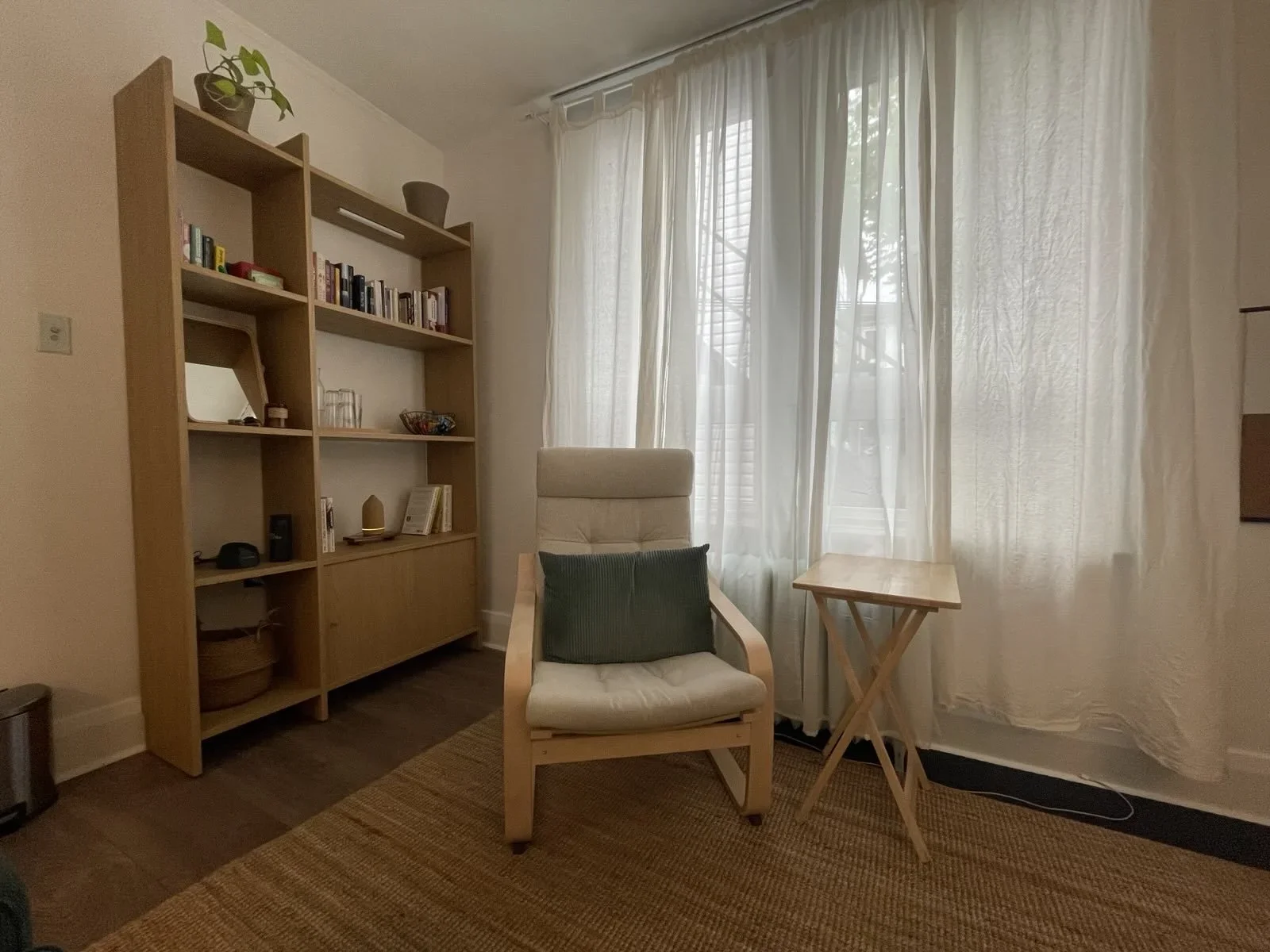
In person in Toronto's Little Portugal, or virtually anywhere in Ontario.

Anxiety says something bad is coming. It's often wrong.
Anxiety is one of the most well-researched conditions in psychotherapy, and one of the most responsive to it, not because therapy eliminates life stressors, but because it gives you the tools to tolerate them and better manage them. You don't have to already feel calm to start. You just have to be willing to.
Before you begin
"What if therapy doesn't work for me?"
Therapy isn't about eliminating all anxiety — it's about understanding what's driving it and building real tools to change your relationship to it. No pressure to feel calm on a timeline.

"Isn't some anxiety just part of my personality?"
Some baseline anxiety is normal. But if it's limiting your life, relationships, or day-to-day functioning, that's not just personality — it's something you can work with.
"Won't talking about my worries just make them worse?"
It's the opposite of what usually happens. Avoidance is what keeps anxiety alive. Working with it directly, with support, is what actually reduces it over time.
Who we work with
We support adults and teens with diagnosed or suspected ADHD who are looking for therapy to support them on their journey, whether that’s navigating a new diagnosis, building better coping strategies, or doing deeper work on relationships and emotional regulation. In person in Toronto’s Dundas West, or online across Ontario.