

EMDR Therapy


Helping You Process Difficult Experiences and Move Forward
Some memories don't stay in the past. They show up as a tight chest in a meeting, a flinch at a raised voice, a certainty you're about to be left — long after the event itself is over. EMDR (Eye Movement Desensitization and Reprocessing) is a structured therapy that helps your brain finish processing those experiences, so they can become something that happened to you rather than something that keeps happening.
We offer EMDR in person at our Dundas West office and virtually across Ontario.

What is EMDR therapy?
EMDR is an evidence-based psychotherapy for trauma and distressing life experiences. While you briefly hold a memory in mind, your therapist guides you through bilateral stimulation — side-to-side eye movements, alternating taps, or tones. This seems to help the brain reprocess the memory so it loses its charge. You'll still remember what happened. It just stops feeling like it's happening now.
One thing people often appreciate: EMDR doesn't require you to describe a painful experience in detail. Much of the work happens internally, with your therapist tracking what shifts.
How EMDR works
EMDR follows eight phases. Not every session touches all of them, and the pace is set by your own progress.
History and planning — We get to know you and identify the memories, triggers and present-day patterns worth working on.
Preparation — Before any reprocessing, we build resources for steadying yourself: grounding, a calm-place practice, ways to come back to the room.
Assessment — We choose a target memory and notice the image, belief, emotion and body sensation attached to it.
Desensitization — Short sets of bilateral stimulation while you notice whatever comes up, without needing to steer it.
Installation — We strengthen a more accurate belief to take the old one's place ("I survived" instead of "I'm not safe").
Body scan — We check for tension or activation the body is still holding.
Closure — Every session ends with you settled, even if the work isn't finished.
Reevaluation — Next time, we check what held and what's next.

What EMDR can help with
Single-incident trauma (accidents, assaults, medical events)
Childhood and relational trauma
PTSD and complex PTSD
Anxiety and panic with an identifiable root
Grief that feels stuck
Phobias and performance anxiety
Persistent negative beliefs about yourself ("I'm too much," "It's my fault")
Match with our therapist specializing in EMDR therapy
Our approach rests on a simple idea: you can't think your way out of dysregulation — change happens through the body. EMDR fits that approach well. It works directly with the way memory is stored in the nervous system, and research on memory reconsolidation suggests why that matters: when an old emotional memory is reactivated alongside a new, contradicting experience, the memory itself can update.
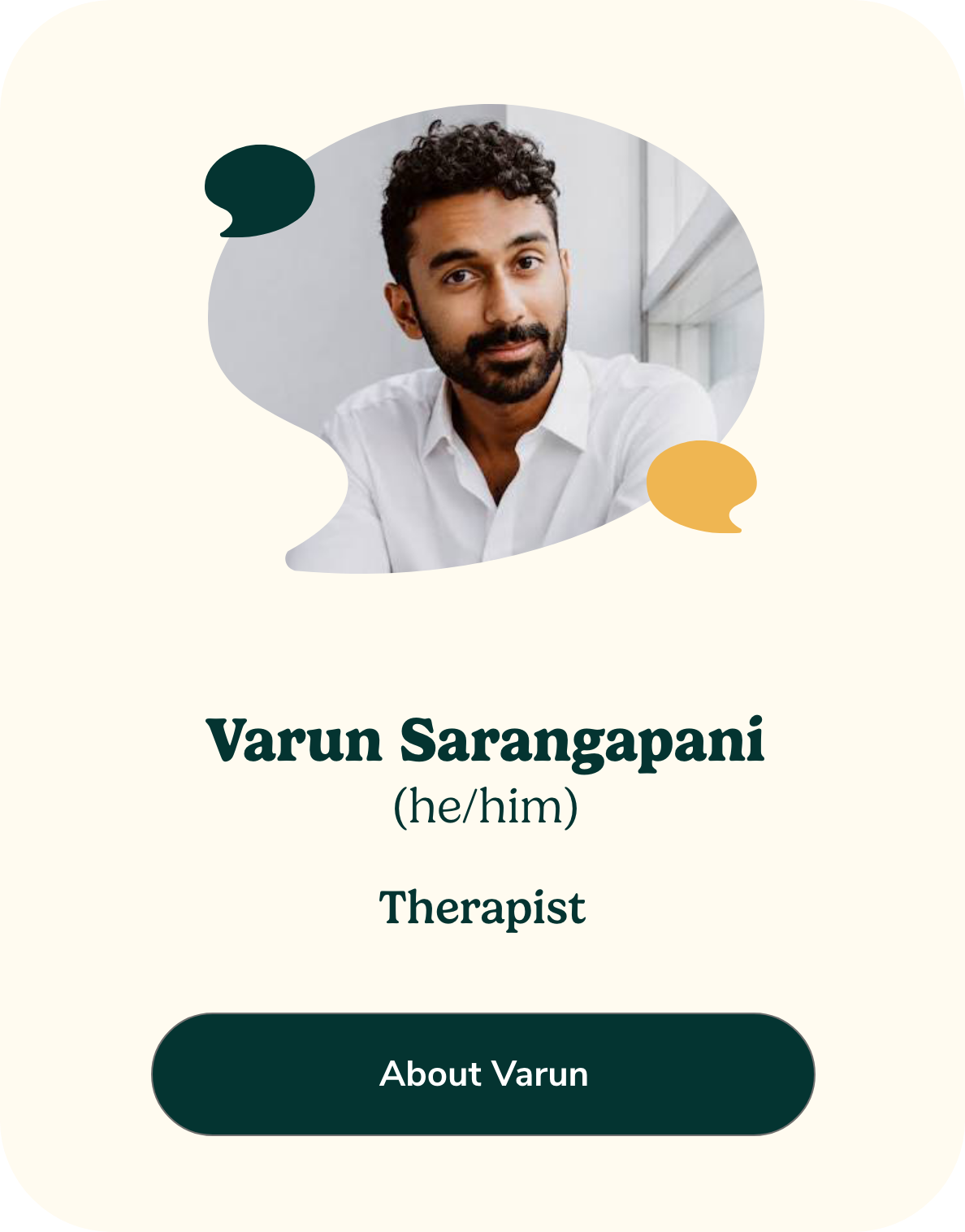
We don't rush to reprocessing. For people with complex or long-standing trauma, the preparation phase may take weeks, and that isn't wasted time — it's where the capacity to do the deeper work gets built. Many of our therapists weave EMDR together with somatic and relational work rather than running it as a stand-alone protocol. EMDR at Noema is offered by: Varun Sarangapani

Is EMDR right for me?
EMDR can be a good fit if you know certain experiences still shape how you feel and react, and talking about them hasn't changed much. It may not be the first step if you're in active crisis or your life is currently very unstable — in that case, we'd focus on stabilization first. A consultation is the easiest way to figure out where to begin.
CFT in Little Portugal and across Ontario
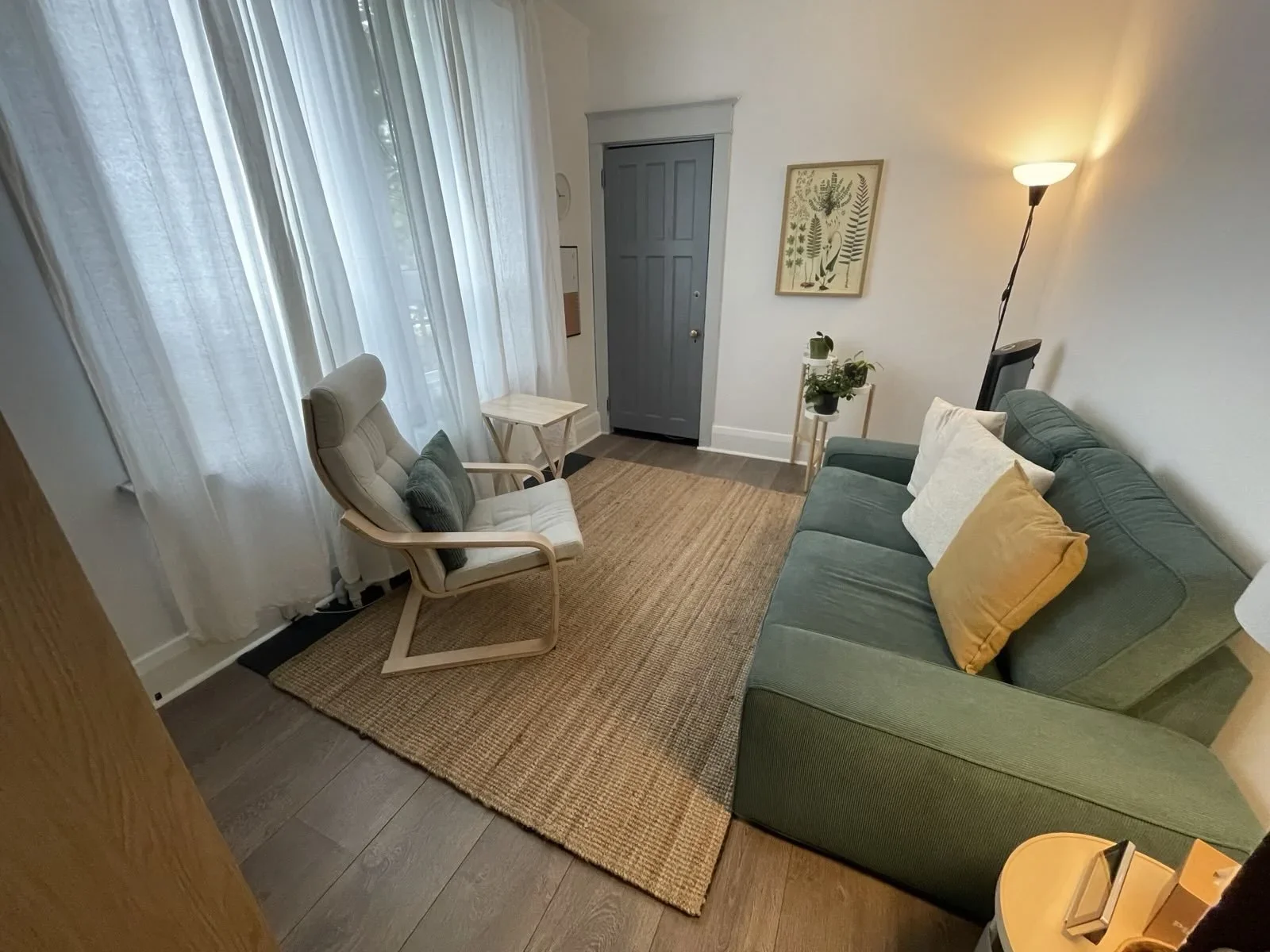
Our office is at 1364 Dundas Street West in Little Portugal, between Ossington Avenue and Dufferin Street — steps from Brockton Village and a short walk to Dufferin Grove, Queen West, and Trinity Bellwoods. We're on the 505 Dundas streetcar line and near the 29 Dufferin bus and 63 Ossington bus, and Liberty Village, Parkdale and Roncesvalles are a quick ride away.
Not in the neighbourhood?
Virtual EMDR is available anywhere in Ontario — bilateral stimulation adapts well to video.
FAQs
-
No. You'll need to identify which memory we're working with, but you don't have to narrate it. Many people find this a relief.
-
It depends. A single, distinct event may resolve in a handful of reprocessing sessions. Complex or childhood trauma usually takes longer, including more preparation time. We'll talk about realistic expectations early on.
-
Yes. Online EMDR uses on-screen eye movements or self-administered taps, and research so far suggests outcomes are comparable to in-person work.
-
Some people feel tired or stirred up after sessions, and memories or dreams can surface between them. That's why we build steadying skills first and close every session carefully. Tell us what you notice — we adjust the pace.
-
EMDR is delivered by Registered Psychotherapists, whose services are covered by many extended health plans. Check your plan for "psychotherapist" or "registered psychotherapist" coverage.
Here’s How to Connect
Fill out the form to schedule your free 20-minute intro call to explore how therapy can support you. We’ll help you get matched with the right therapist for you.
Email us with any questions you might have.
To book an appointment via JaneApp use the link below.

Schedule Your Free Consultation
Reaching out is usually the hardest part. From here, things get simpler.
Fill out the form below and one of us will be in touch within one business day, usually the same day. No pressure, no commitment. Just a conversation.